Skip to content

Cavity Filters

Very low insertion loss and high selectivity

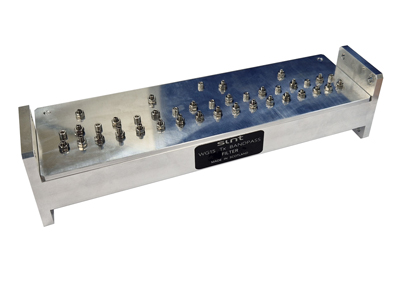
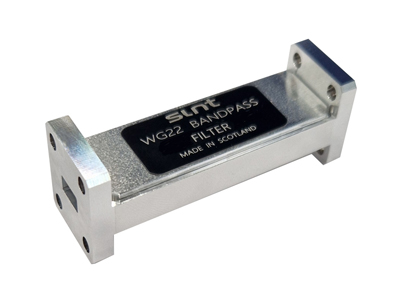
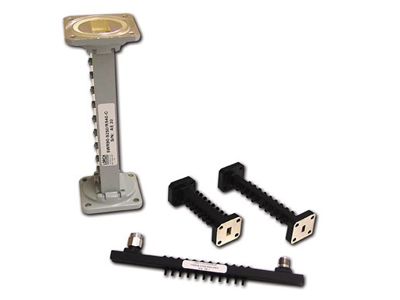
Cavity filter designs are available in the frequency range of 30 MHz to 65 GHz and with bandwidth options from less than 0.5% to over 66%. Cavity filters offer the user very low insertion loss, steep skirt selectivity, and narrower bandwidths than discrete component filters. Smiths Interconnect’s waveguide filters provide low-loss solutions for high power applications.  Waveguide filter operating frequency ranges from 1 to 100 GHz and can be offered with temperature stable materials.

For EMEA customers please click here for product specifiations and ordering information.

Features & Benefits

  • Frequency range: 30 MHz to 65 GHz
  • Bandwidth: 3 dB from 0.5% to 66%
  • High “Q”, low loss
  • High power
  • Helical, combline, inter digital, and waveguide

Applications

  • Military
  • Commercial Aerospace
  • Satellite Communications
  • Test and Measurement
Product Series Center Frequency Bandwidth Temperature Range Power Handling Data Sheet
C-Band  6 GHz 400 MHz -55 to 85 deg. C 10 W PDF
X-Band  10 GHz 2000 MHz -55 to 85 deg. C 10 W PDF
Ku-Band  15 GHz 3000 MHz -55 to 85 deg. C 10 W PDF
K-Band  22 GHz 6000 MHz -55 to 85 deg. C 10 W PDF
Ka-Band Waveguide  35 GHz 600 MHz -45 to 85 deg. C 1 W PDF

Overview

Smiths Interconnect’s cavity filters offer the user very low insertion loss, steep skirt selectivity, and narrower bandwidths compared to discrete component filters. Designs are available in the frequency range of 30 MHz to 65 GHz and with bandwidth options from less than 0.5% to over 66%.

High “Q” standard and custom designed models offer the lowest insertion loss and best selectivity available for military and commercial applications. Standard cavity filters generally are designed using aluminum as the base metal. As most raw metals are inherently lossy, filter housings are silver plated for improved electrical characteristics and current flow. Brass, copper, aluminum, or bi-metal resonators are used to minimize frequency drift over temperature. Each filter is semi-custom-designed to your exact specification so that you will receive the optimum performance at the lowest cost.

Filter performance is easily predicted using our proprietary software, while CAD files are generated for our CNC machine and fabrication center. Complex designs and working drawings can be generated in a matter of a few hours...not weeks.


Related Products

  • Image of RF Solution Services

    RF Solution Services

    Through the RF Solution Services, product design and manufacturing can be completed in a phased approach and terminated after any phase.

Related News

  • Image of LightCONEX®

    The next step in optical interconnectivity for the defense industry

    Optical interconnectivity has a significant impact on the defense industry. Not only does it allow greater amounts of data to be passed over longer distances, but it also minimizes SWaP (size, weight, and power) relative to copper alternatives. In fact, cabling weight can be reduced more than 90% with no interference and carry high-speed data 15 to 20 times further.

  • Image of C Series Connectors

    How connectivity can play a key role in rail braking systems

    Train deceleration is a key function that implies passengers’ safety, environment and property protection and nothing can be left to chance or neglected when it is the moment to select the right parts that have to compose the brake system. With this in mind, the design engineers have to pay attention to reduce the overall maintenance costs as well to provide a dependable and market aligned solution.