Skip to content

RF Filters and Diplexers

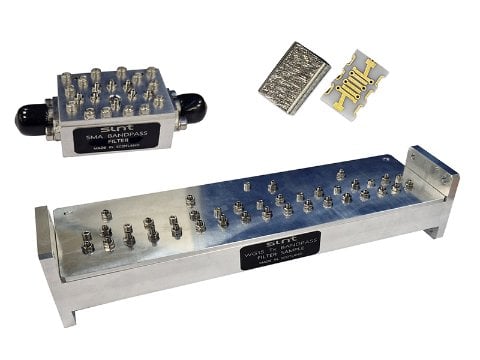
Cavity/Discrete/Waveguide/Ceramic/Wireless Filters

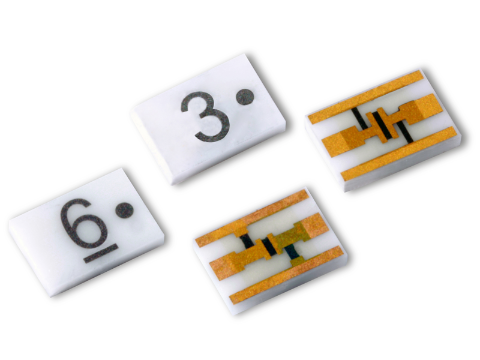
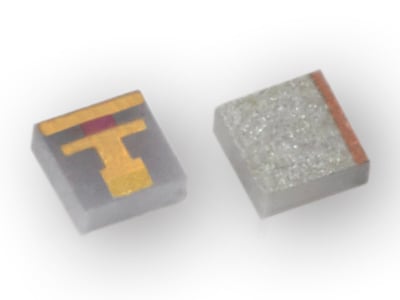
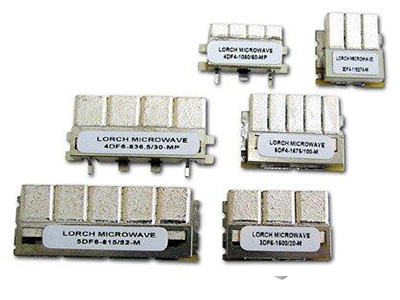
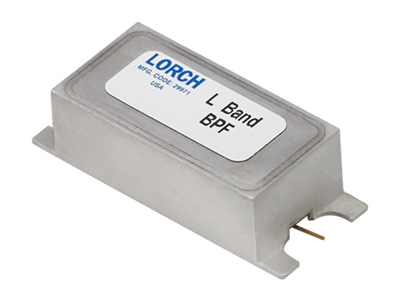
Series of discrete lumped element filters and diplexers with standard “off the shelf” packaging utilizing the same internal components, circuit topologies and transfer functions found in Lorch filter products manufactured for military and space applications. Standard units are an ideal choice when hermetic sealed packages are not a requirement and when lower cost and quick delivery are essential.

Brochure Filter Select Plus

Features & Benefits

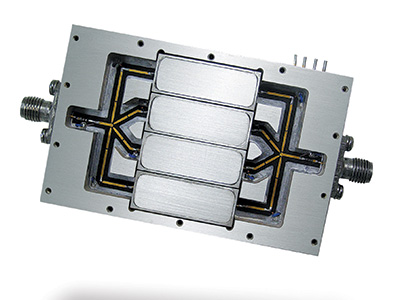
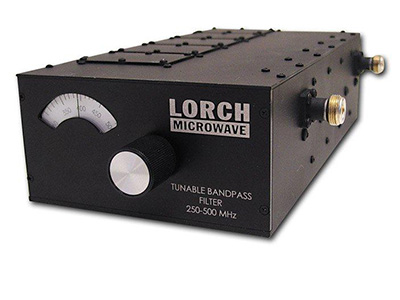
Cavity filter designs are available in the frequency range of 30 MHz to 40 GHz and with bandwidth options from less than 0.5% to over 66%. Cavity filters offer the user very low insertion loss, steep skirt selectivity, and narrower bandwidths than discrete component filters. Cavity filter performance is based on parts selection and physical layout of the helical coils, resonators, as well as the shape and size of the cavity housing. At lower frequencies a helical coil is used to excite the electromagnetic field, while a 1/8 to 1/4 wave capacitively loaded design is used at higher frequencies.

A cylindrical waveguide design is used to achieve narrow bandwidths and high power operation. Each filter is custom-designed to your exact specification so that you will receive the optimum performance at the lowest cost. Standard cavity filters generally are designed using aluminum as the base metal. Filter housings are silver plated for improved electrical characteristics and current flow. Brass, copper, aluminum or bi-metal resonators are used to minimize frequency drift over temperature.

  • 30 MHz to 40 GHz
  • 3 dB Bandwidths from <0.5 to >66%
  • High "Q", Low Loss
  • Computer-Aided Designs
  • Helical, Combline, Interdigital Waveguide
  • 12 Stock Series

Related Products

  • Image of RF Solution Services

    RF Solution Services

    Through the RF Solution Services, product design and manufacturing can be completed in a phased approach and terminated after any phase.

Related News

  • Image of Smiths Interconnect Test Sockets

    FAQs at Smiths Interconnect: test sockets, capabilities, and support

    After over 40 years of industry experience, Plastronics was acquired by Smiths Interconnect as the company’s one-stop shop for burn-in and reliability testing. As the complementary in-house burn-in division, we have also brought a wealth of knowledge and expertise in socket design and manufacturing.

  • Widget Image ALT

    New Volta 180 supports Wafer Level Packages and Known Good Dies test businesses

    The new Volta 180 Series is an advanced WLCSP test solution that expands Volta product line to include the compact 180um pitch, allowing for a higher number of chips to be tested on each wafer. It allows for a fast and reliable testing of wafers to ensure that they meet specifications and perform as they should, which translates into higher quality end products.

  • Image of Burn in test products

    What is thermal simulation and why is it important to reliability burn-in testing?

    Not every semiconductor manufacturer utilizes thermal simulation in their reliability testing setup. Lower power burn-in allows for an acceptable temperature rise within the package/die in a traditional burn-in chamber running at 125°C. As packages in burn-in are moving to higher power output, socket and burn-in systems may need to have enhanced features to manage the desired target die temps.