Skip to content

MIL-DTL-38999 Quadrax/Twinax

Differential Twinax and Quadrax Connector

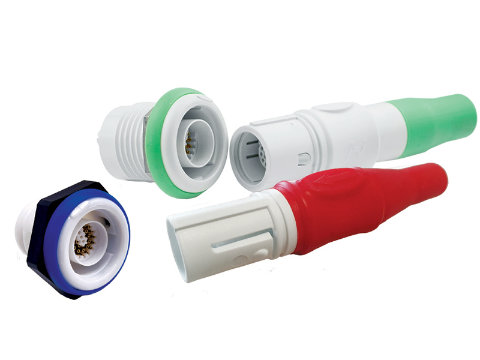
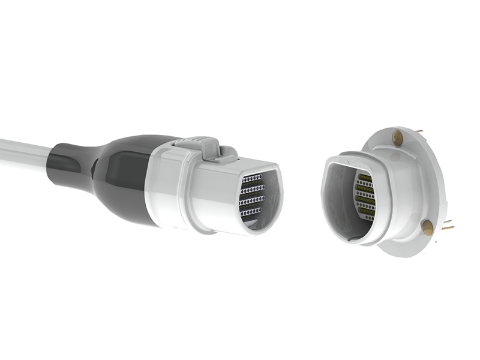
MIL-DTL-38999 Quadrax/Twinax connectors feature data rates exceeding 2 Gbps and a bandwidth: up to 3 Ghz. The connectors can be driven via matched impedance differential pair interconnections for board to board high speed data transfer. They are ideal for reliable, high-speed transfer of digital audio / video signals.

Brochure

Features & Benefits

  • Data rates exceeding 2 Gbit/Sec
  • Bandwidth: Up to 3 GigaHertz
  • Can be driven via matched impedance differential pair interconnections for board to board high speed data transfer
  • Ideal for reliable, high-speed transfer of digital audio/video signals
  • Cable assembly options available

Overview

Smiths Interconnect offers a complete line of differential Twinax and Quadrax connectors, contacts and cable assemblies for high speed Ethernet, Firewire, and Fibre Channel applications. Differential pair quadrax and twinax connectors and cable assemblies offer superior performance in high speed matched impedance data-on-demand applications. The signal to signal and signal to shield characteristic impedance is maintained throughout the connector pair. A true twinaxial connector interface ensures signal integrity while minimizing jitter and data rate errors.

Related Products

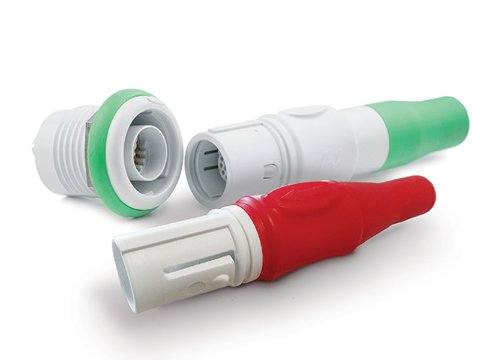
  • Image of Connectors Cable Assemblies and Harnesses

    Connectors Cable Assemblies and Harnesses

    Cable assemblies and harness solutions designed to meet the demands of high-reliability applications across aerospace, defence, automotive, and construction machinery industries.

Related News

  • Image of New Lowpass RF Filter solutions in the X Band

    New Lowpass RF Filter solutions in the X Band

    The new Planar X Series leverages thin film process technology on various substrates which are designed for mission critical applications. The small footprint, light weight and surface mountable configuration allow for high-volume pick and place applications and are ideal for Radar, SATCOM, and Satellite industries.

  • Image of LightCONEX_43

    Overcome Challenges in Embedded Optical Interconnects Design

    The above article has outlined the advantages and challenges of using fiber optical interconnects. To use fiber optic cables, the electrical signals need to be converted to light signals using fiber optic transceivers. While there are many challenges to embedded fiber optics design, the benefits are substantial. The guidelines and design check list provided will help developers select the best solutions for their needs.