Skip to content

SpaceNXT™ Ku Series

High Power Waveguide Circulators & Loads

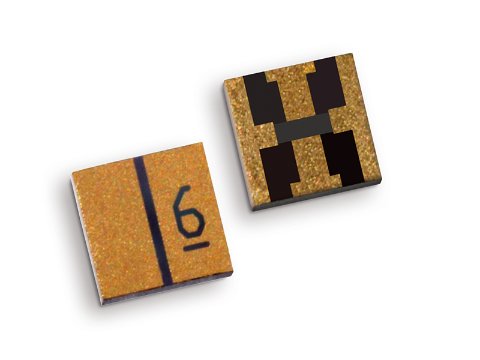
The SpaceNXT™ Ku-Band High Power family of passive waveguide components are part of Smiths Interconnect’s overarching initiative to create a broad range of readily accessible space qualified waveguide Isolators, Circulators, Terminations, transitions, Hybrids and couplers operating in assigned bands from X to V-Band specifically for space applications.
Features & Benefits

  • Guaranteed low and stable insertion loss under maximum power:
    • Circulators: 0.11 dB insertion loss with 20 dB minimum Return Loss over -25ËšC to +125ËšC
    • Loads: 20 dB minimum Return Loss over -25ËšC to +135ËšC
  • Multipaction and Corona Test Reports available
  • Proven Circulator design tested to 350 Watts CW Power. Unconditionally linear.
  • Proven Load design tested to 267 Watts average CW Power
  • Tested to meet Electro Magnetic Compatibility (EMC) specification to -80 dBi
  • Low Mass – Aluminum Housing with Chromate Finish
  • 40 years of Unrivalled Space Heritage
  • All testing in compliance with generic space qualification flow, incorporating industry standard power and environmental requirements

Overview

Smiths Interconnect’s SpaceNXT™ product portfolio provides customers with a combination of highly reliable technology and lower cost of ownership that enables operators to overcome potential market entry barriers while enjoying the benefits of an established technology partner.

The SpaceNXT™ Ku-Band High Power family of passive waveguide components are part of Smiths Interconnect’s overarching initiative to create a broad range of readily accessible space qualified waveguide Isolators, Circulators, Terminations, transitions, Hybrids and couplers operating in assigned bands from X to V-Band specifically for space applications.
Documents & Literature

Related News

  • Image of Reflex Photonics

    Smiths Interconnect acquires Reflex Photonics

    Reflex complements Smiths Interconnect’s product offering with the addition of a core fibre optic capability that will help address the needs arising from high speed data transmission in market segments requiring high reliability.

  • Image of Space Flare

    Optical Interconnect Design Challenges in Space

    Aeronautical applications face many design challenges that are unique to their intended environment. The best practices for optical interconnect design for space applications include the use of radiation-resistant technology to defend against space radiation, the use of components and devices that are designed to operate in harsh environments, and meeting size, weight, and power (SWaP) and long-term reliability requirements. Finally, it is recommended to follow open standards like VPX and to look for solutions that comply with MIL and quality standards.