

Search
Search Results
239 Results

How Rail electrification can contribute to emissions reduction
The great impetus given by the COP26 summit has raised the world's awareness of climate change and made it a global priority. It is today well-known that to halt the consequences of climate change we need to limit global warming to 1.5°C (34.7°F) above pre-industrial levels. As a result, all aspects of our lives are under scrutiny.

Cavity filter technology can support aviation devices with radar altimeter interference
The recent rollout of the 5G C-band frequencies has caused concerns for radar altimeter interference in avionic systems—including commercial transport, business, regional, and general aviation airplanes and helicopters.
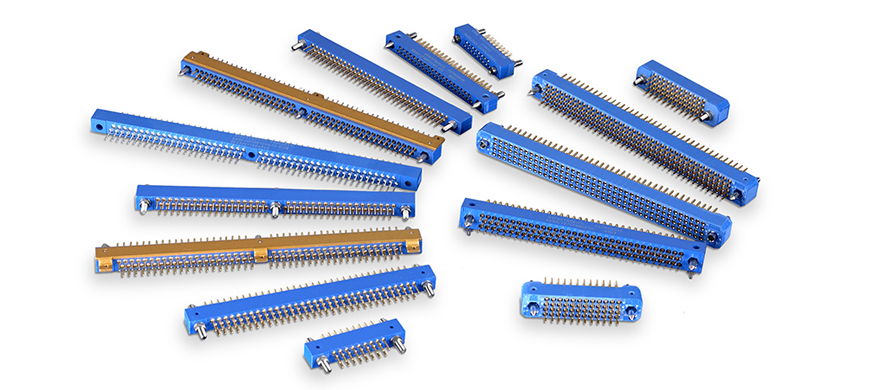
Enhanced ratings for KA connectors
Our popular KA Series PCB connectors are capable of performing to significantly higher levels than the conservative ratings to date might suggest.
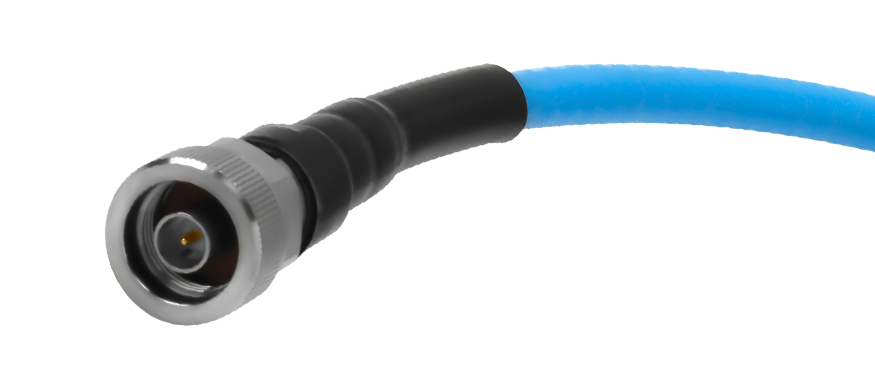
Mission Critical: Maintain your RF cables and connectors
Guidelines for maintaining cables and connectors.
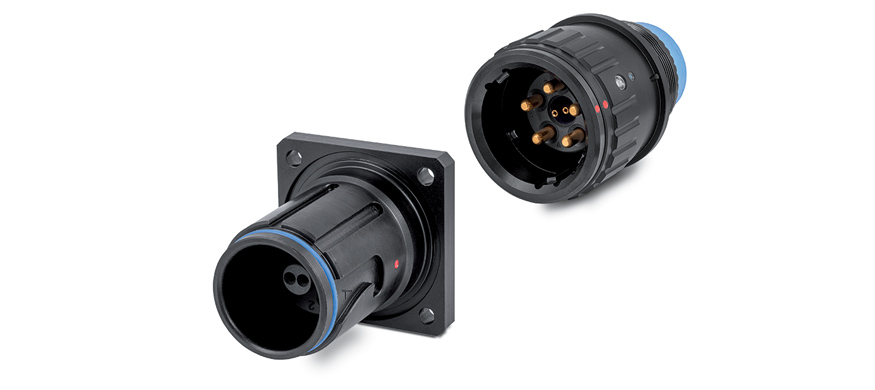
High five for new HBB circular connectors
Smiths Interconnect’s new HBB five-pole connector packs flexibility, reliability and safety as well as power into one easy-to-use connector for demanding applications. We’ve built an international reputation on our ability to anticipate customers’ future needs and innovate to meet them. In the defense sector, we’ve been exploring the potential of the energy revolution for combat vehicles, both on the ground and in the air.
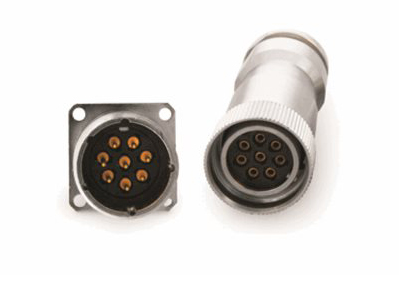
How connectivity can play a key role in rail braking systems
Train deceleration is a key function that implies passengers’ safety, environment and property protection and nothing can be left to chance or neglected when it is the moment to select the right parts that have to compose the brake system. With this in mind, the design engineers have to pay attention to reduce the overall maintenance costs as well to provide a dependable and market aligned solution.

How to select the right electrical connector for specific medical devices and applications
To ensure patient and provider safety, medical connectors must satisfy a variety of government and industry standards depending on the usage and specific applications.

Small but mighty: How attenuators benefit defense and space industries
Current space and defense industries are putting pressure on electronic manufacturers to deliver high performance with smaller form factor. For applications in these industries, from radios to drones and satellites, miniaturizing components such as RF chip attenuators with broad frequency ranges is becoming critical for developing technology and meeting the challenging demands of defense and space applications.

Is it really that hard to improve chip test performance?
In the digital era, semiconductor chips are present in almost every aspect of our lives. Whether it is from microwave ovens to computers, cell phones, computer central processing units, and other electronic devices there are a variety of chips installed.
The next step in optical interconnectivity for the defense industry
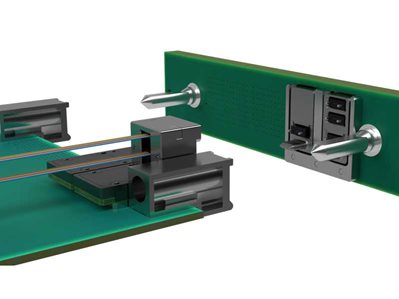
Optical interconnectivity has a significant impact on the defense industry. Not only does it allow greater amounts of data to be passed over longer distances, but it also minimizes SWaP (size, weight, and power) relative to copper alternatives. In fact, cabling weight can be reduced more than 90% with no interference and carry high-speed data 15 to 20 times further.
Customizable modular connectors for demanding therapeutic devices
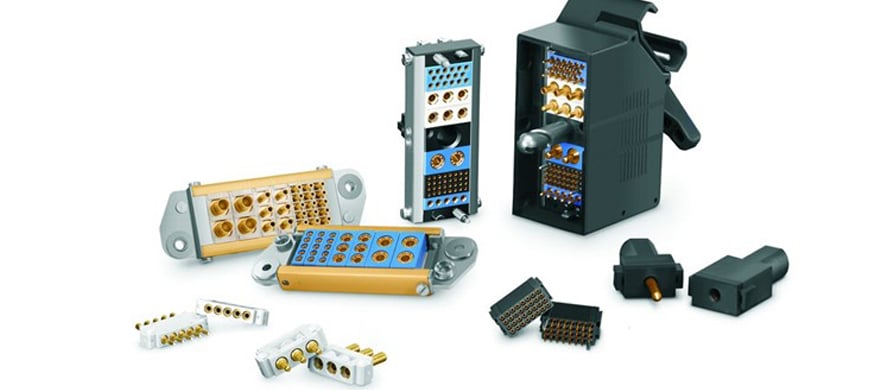
Modern therapeutic systems for the treatment of weight loss for both health and aesthetic purposes are evolving to help people live a better life. To achieve the necessary results, medical devices need to ensure long-lasting, constant and high-level performance with reliable components able to support harsh conditions.
Phase stable cable assemblies: reliability where it’s needed most
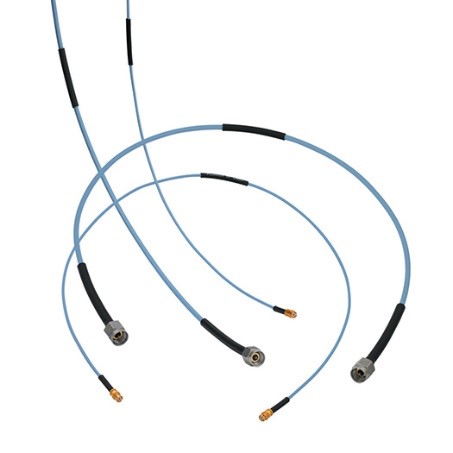
From military aircraft to radar applications to satellite communication links, we rely on cable assemblies to transmit signals between multiple devices, internally in a single device, or as part of testing processes.