

Search
Search Results
290 Results
Cost-Effective Interconnects for Autoclaved Medical Devices
The medical market is becoming more and more impacted by influences of emerging market mega trends including expanding global markets, where products must be made to meet the economic and supply needs of the local area; aging populations, which drive the need for increasing availability of high-quality and affordable medical devices;
Inspiring the next generation of engineers
Smiths Interconnect’s president looks forward to meeting the challenges of 2020 based on the successful results of 2019.
CTX Series Test Report
CTX Series Test Report pdf

Following the evolution of the rail mobility
The demand for reliable connectivity today concerns all systems that are part of the railway transportation, including safety control and command systems, power distribution and data transmission on-board or on-board infrastructure systems including communications.
CEX Series Test Report
CEX Series Test Report pdf

Reliability Testing of COTS Fibre Optic Transceivers
Optical fiber communications offer the largest data processing capacity over any other technology; with the added benefit of being associated with small weight and low power consumption. Optical communication is a proven technology that has been deployed in harsh defense and avionics applications for a large number of years. Intra- satellite applications; offering services such as high-speed Internet, in-flight connectivity and broadband connectivity to rural areas; being associated to distances limited to tens of meters, the most adapted technology for such an environment is parallel multimode fiber optics transceiver-based communication links.
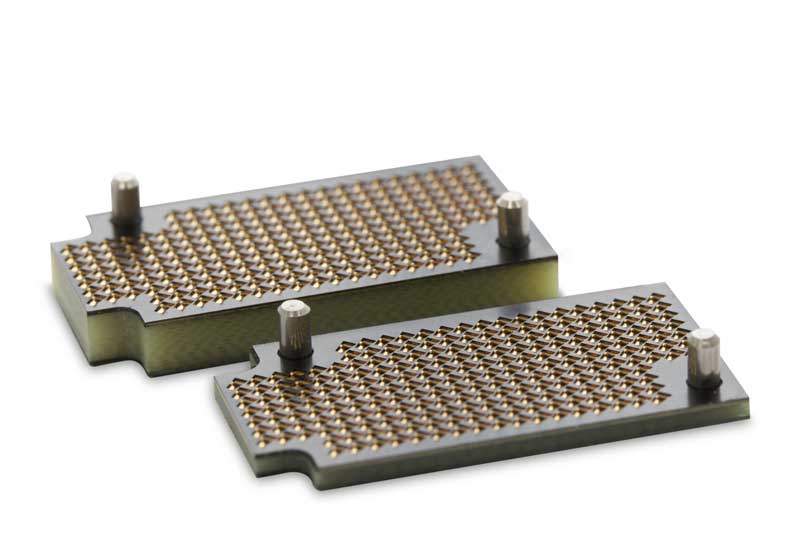
Understanding the Test Criteria of Optical Fiber Transceivers Used in Space
In space and avionics applications, failure is not an option. Components must stand extreme heat, cold, radiation, shock, and vibration, yet deliver reliable performance. Devices must be tested beyond what is specified to ensure performance in harsh environments to avoid failure.
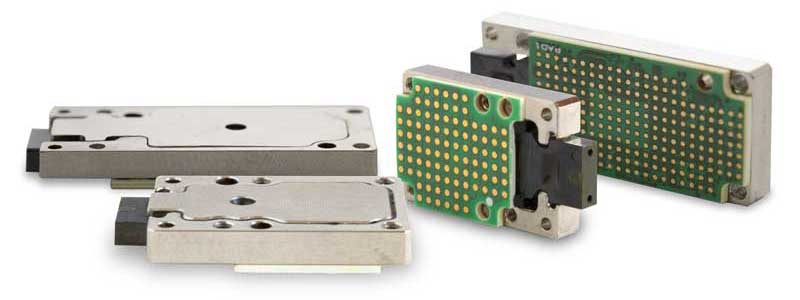
Overcome Challenges in Embedded Optical Interconnects Design
The emergence of IoT in cloud computing and the demand for 4G and 5G networks worldwide are driving the increased use of optical transceivers in a wide variety of applications: business, government, industrial, academic, and cloud servers in public and private networks. Both local area networks (LAN) and wide area networks (WAN) are demanding more bandwidth packed into smaller spaces, and traditional copper interconnects cannot satisfy the insatiable appetite of all the network servers and gateway devices. Furthermore, the next generation of networking devices will need to be even more compact and faster. According to market research firm Radiant Insight, the optical transceiver market will reach $9.9 billion by 2020, three times its 2013 level.
CTX SMT Series Test Report
CTX SMT Series Test Report pdf
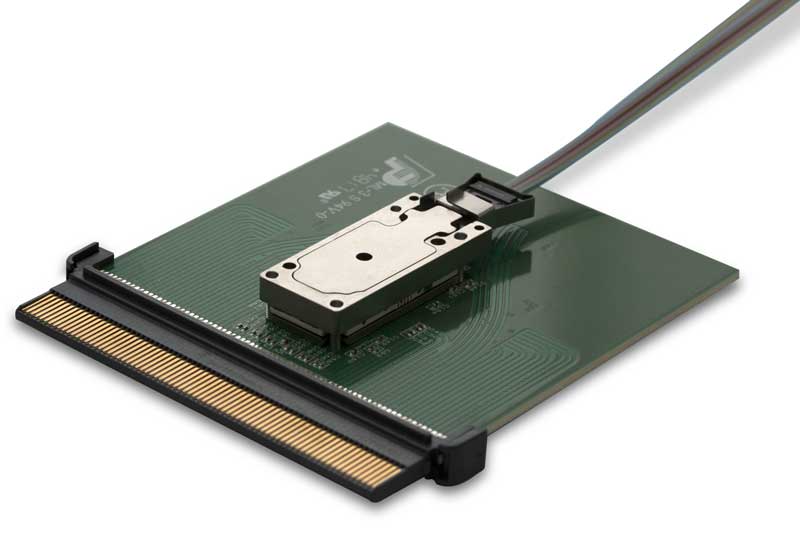
High-density 12 transmitters plus 12 receivers rugged optical fiber transceivers
A novel optical fiber transceiver offering 24 lanes at up to 14 Gbps is presented; its external dimensions are 32.3 mm ×13.4 mm × 4.5 mm; it is compatible with the VITA66.4 standard or can be embedded on a host PCB; its operating temperature range is –40°C to 100°C.

Optical Interconnect Design Challenges in Space
More and more aerospace applications are incorporating fiber optics technology into their designs due to its many advantages over copper. The thinner fiber solutions provide higher speed over a longer distance, are more reliable, offer higher noise immunity and, in many cases, lower the cost of ownership.

The Internet of space and radiation hardened transceivers
We are on the verge of a new era of human connectivity and communications – the Internet of Space (IoS) is upon us. The explosion of worldwide communications over the past 25 years has led to the pervasive use of mobile and land communications equipment with an abundance of platforms, applications and devices all driving the growth of many of the largest businesses in the world. There is no doubt that this trend will continue through the Internet of Things (IoT), along with improvements to the underlying network infrastructure. However, the next, ‘Small Step’ for man in terms of ubiquitous communications will be the ‘Giant Leap’ into the Internet of Space.