Skip to content

Fibre Channel D-Sub

150 Ohm High Speed Quadrax Connectors

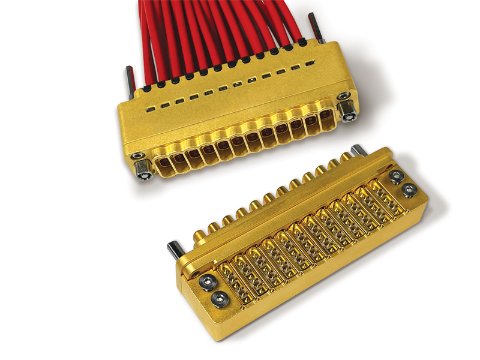
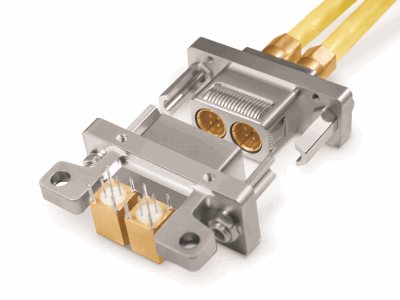
Fibre Channel D-Sub connectors offer high Data rate 6.25 Gbps, high shock and data resistance and high density quadrax. The main function associated with high impedance D-Sub connectors is to ground the outer shield of a quadrax contact directly to the shell of the connector.

Brochure

Features & Benefits

  • Standard keyed and non-keyed insert arrangements: 2, 4, 6, 8 way; hybrid options available
  • Offered with 150 Ohm impedance Data rates up to 6.25 Gbps
  • Six-position keyed and non-keyed jack post versions
  • Common back shells with a wide assortment of accessories, guide hardware and sealing grommets
  • Integrated EMI spring fingers offer superior EMI performance with low contact resistance
  • Featuring Sabritec technology

Overview

The Fibre Channel D-sub connector series features a multi-finger ground spring fixed around the shell provides a multi-point contact engagement that affords superior EMI shielding. The end result is extremely low contact resistance when measured from the contact outer body to the connector flange. The Fibre Channel D-Sub series also delivers superior performance ensuring minimal RF noise and high durability up to 1,000 mating cycles, while meeting and surpassing all requirements of MIL-STD-202 for shock and vibration.

Offered with 150 Ohm quadrax contacts, the connectors are available with 2, 4, 6 or 8 way insert arrangements. Additionally, D-Sub connectors feature ease of assembly, and a robust and comprehensive training package. To ensure that the correct high speed connectors are mated to address specific wiring requirements and keying functions, a keyed jack post option has been incorporated into the design. The six-positioned post allows for 36 possible keying combinations assuring that the correct Fibre Channel D-Sub plug is mated to the correct high speed receptacle. Non-keyed jack post versions are available as well. Fibre Channel D-Sub connectors feature size 3 quadrax contacts which are 30% larger than the size 9 configuration utilized in the 100 Ohm quadrax, ensuring a matched impedance signal throughout the contact mated pair at 150 Ohm differential impedance. These features ensure that Smiths Interconnect's Fibre Channel D-Sub connectors deliver the critical edge customers require.

Related Products

  • Image of Micro-D Twinax (MDTX)

    Micro-D Twinax (MDTX)

    Twinax blindmate assemblies fitted into a low-profile metalized Micro-D style shell.

  • Image of Nebula Series

    Nebula Series

    High reliability SATA 6.0 Gbps connector designed for rugged storage applications within the commercial aerospace, defence and industrial markets.

  • Image of Connectors Cable Assemblies and Harnesses

    Connectors Cable Assemblies and Harnesses

    Cable assemblies and harness solutions designed to meet the demands of high-reliability applications across aerospace, defence, automotive, and construction machinery industries.

Related News

  • Image of Smiths Interconnect: Leading the Way in Burn-In Socket Testing Solutions

    Smiths Interconnect: Leading the Way in Burn-In Socket Testing Solutions

    As the demand for consumer electronics, AI-driven technologies, and high-performance computing rebounds, Smiths Interconnect is poised for growth. Innovations in large package sizes, high pin counts, and power consumption optimization in GPUs, CPUs, and HPCs position the company as a leader in the next generation of semiconductor testing solutions.

  • Image of Raising the Bar of Burn-In Testing Sockets

    Raising the Bar of Burn-In Testing Sockets

    Burn-in testing is widely used as an aid in producing failure-free electronic components. When scientifically planned and conducted, burn-in-testing sockets offer one of the most effective methods of reliability screening at the component level. Testing during production plays a vital role in ensuring reliability and repeatability. Semiconductor manufacturing plants perform tests at each stage of production to eliminate defective parts as early as possible while precisely controlling each process parameter of the chip.