

- Immunity to detrimental fretting due to shock and vibration
- Conforms to MIL-DTL-55302 general requirements and TPR 02013
- Light weight connector
- High shock and vibration proof (no micro interruptions - test: 2ns)
-
KMC Series
High-density board to board and board to wire interconnect solutions available in multiple configurations from 26 to 162 positions with a 0.5mm contact diameter and is widely used in harsh environments.
-
MDD Series
The MDD is a metal shell connector available with a 100 and 200 signal contacts configuration. With a 0.5mm contact diameter, with straight, surface mount tail and 90° termination styles. The metal shell improves system reliability by ensuring high levels of shock and vibration and by eliminating contact fretting, hence reducing wear rates, and avoiding system failure and down-times.
-
HPH Series
HPH is suitable for the most demanding Commercial Aerospace, Defense and Industrial applications.
-
C9394 Series
Available in 132 through 594 positions, that can be configured to include fiber optic and coax options.
-
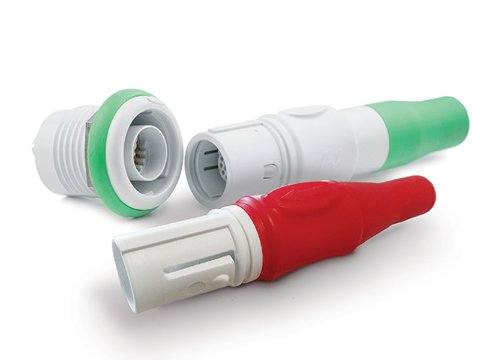
Expanded product offering for disposable healthcare applications
The new disposable connector plug leverages the versatility of the Hypergrip® Series to deliver a reliable interconnect solution for single or few uses, ideal for applications that don’t require high cycle life but still require a premium disposable connector mated with a high cycle receptacle.
-

Smiths Interconnect Nominated for Multiple Electronics Industry Awards 2024
Smiths Interconnect is thrilled to announce that we have once again been nominated for the prestigious Electronics Industry Awards.
-

New High Speed Data Transmission Modules
Modules of various styles and different contact types are available for different application requirements, combining signal, power, coaxial, pneumatic and, from now on, data contact technologies into custom arrangements within a single connector frame.
-
.png?ext=.png&width=480&resizemode=force)
Power Connector: the critical weak point? There’s a proven solution
Power connectors are a critical weak point in high‑current battery systems. Discover how advanced hyperboloid contact technology reduces power loss, heat and reliability risks in demanding applications.