Skip to content

SNAP12

40G/75G/120G Optical Transmitters and Receivers

The SNAP12 family of optical embedded transceivers are affordable, reliable, high-performance embedded optical transceivers with bandwidth up to 120 Gbps. These are well suited for high-bandwidth commercial aerospace systems with the added benefit of reducing aircraft wiring and system weight and bringing fault, EMI/EMC and lightning tolerance.

Brochure

Features & Benefits

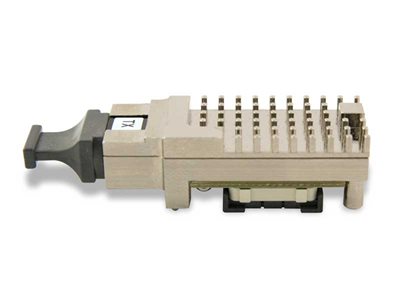
SNAP12 is a 12-channel pluggable parallel optical transmitter or receiver module with a standard chassis mountable MPO interface. It is a self-contained, electrical to optical converter, which requires no internal fiber management or handling. All modules include state of the art LightABLE™ optical packaging technology. The SNAP12 high-speed rugged modules are used extensively in commercial aerospace for IFEC (in-flight entertainment and connectivity) applications, high-performance computers, and industrial equipment.

  • Performance: up to 10.3125 Gbps/channel
  • Proven: thousands used in IFEC and industrial applications
  • Reliable: rugged construction to provide long life and consistent service
  • Easy to use: Plug & Play – Standard MPO/MTP® optical interconnect
  • Interoperable: SNAP12 MSA compliant
  • Commercial (0°C to 70°C) operating temperature range

Configurations

  • 12-channel transmitter
  • 12-channel receiver

Applications

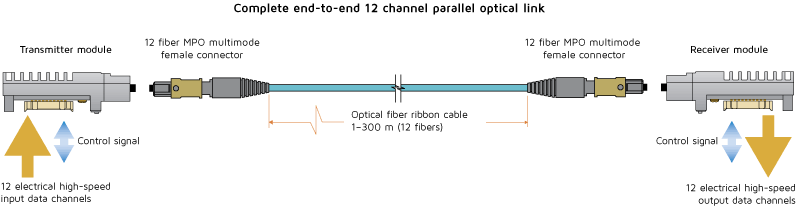
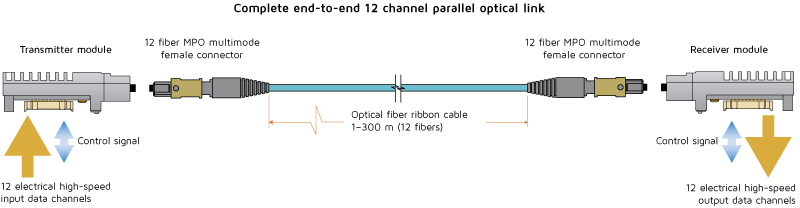
SNAP application

The use of the SNAP12 brings numerous advantages over traditional copper interconnects such as:

  • Ability to distribute uncompressed video
  • ​Reduced wiring and system weight
  • Fault tolerance
  • EMI/EMC and lightning tolerane
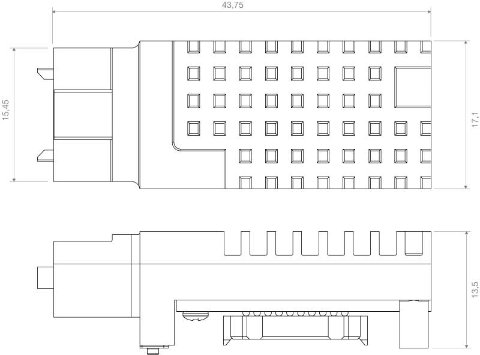
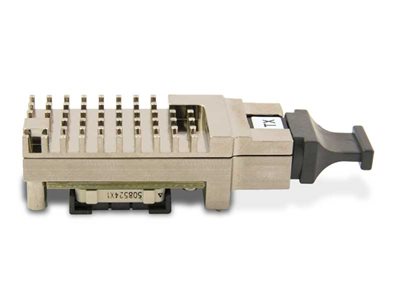
Drawing of SNAP12

Drawing of SNAP12 module. Dimensions are given in mm.

Related News

  • Image of Smiths Interconnect awards top distributors for 2022

    Smiths Interconnect awards top distributors for 2022

    The distribution award initiative recognizes and celebrates the business partners whose efforts have contributed to advancing Smiths Interconnect’s business respectively in the Americas, EMEA and Asia. Winners were selected as best performing distributors in terms of sales growth compared to the previous year.

  • Image of Optical interconnect for high-speed, high- bandwidth 10GigE and 40GigE cameras used in machine vision.

    Taking the Fast Bridge between Neural Networks

    Neural networks have been around since the 1950s. The advent of fast, massively parallel processors like the Graphics Processing Unit (GPU) have made neural network applications like object recognition feasible. Neural networks are one means used to create Artificial Intelligence (AI). The latest iPhones now have an AI chip, primarily to offload face recognition tasks.1 Voice translation tasks would also benefit from an AI chip. Google provides voice translation as long as there is access to a cloud. The ability to translate directly from a phone without requiring Internet access to Google engines would be advantageous, and it’s possible that the iPhone is headed in that direction.

  • Image of One World Web Coverage

    The Internet of Space and radiation resistant transceivers

    The explosion of worldwide communications over the past 25 years has led to the pervasive use of mobile and land communications equipment with an abundance of platforms, applications, and devices all driving the growth of many of the largest businesses in the world. There is no doubt that this trend will continue through the Internet of Things (IoT), and the arrival of the 5G technology along with improvements to the underlying network infrastructure. However, the next, ‘Small Step’ for man in terms of ubiquitous communications will be the ‘Giant Leap’ into the Internet of Space.

  • Image of Optical Transceivers

    Reflex Photonics Legal Name Change

    Continuing that journey, we are pleased to inform you that we have begun the process of changing the legal name of our company from Reflex Photonics Inc. to Smiths Interconnect Canada Inc.